How to Grow Fresh Garlic at Home
Growing your own garlic at home is one of the most satisfying and beginner-friendly gardening projects you can try. Garlic is a hardy plant, requires minimal care, and can thrive in a variety of growing conditions. Whether you have a large backyard garden, a small raised bed, or just a few containers on a sunny patio, garlic can grow successfully in surprisingly small spaces.
Many gardeners enjoy growing garlic not only for its culinary value but also because it is easy to manage and stores well after harvest. A few cloves planted in the right conditions can turn into full garlic bulbs within a single growing season. Homegrown garlic also tends to have a richer flavor compared to store-bought varieties, making it a rewarding crop for anyone who enjoys cooking.
Another advantage of growing garlic is that it fits well into both traditional gardens and compact gardening setups. It can grow in containers, raised beds, or narrow garden borders. With proper soil preparation, sunlight, and watering habits, even beginner gardeners can achieve a healthy harvest.
In this guide, you will learn the simple steps to grow fresh garlic at home, including how to choose the right cloves, plant them correctly, and care for them throughout the growing season.
1. Choosing the Right Garlic
The first step in growing garlic is selecting healthy garlic cloves for planting. Garlic grows from individual cloves separated from a full bulb. It is best to choose firm, healthy bulbs that show no signs of mold, softness, or damage.
Many gardeners prefer to plant garlic that is specifically intended for gardening, but fresh garlic from a grocery store can also work if it is healthy and untreated. Larger cloves generally produce larger bulbs, so it is usually best to select the biggest cloves from the bulb for planting.
When separating the cloves, keep the papery skin intact. This protective layer helps prevent damage and supports healthy root development after planting.
2. Preparing the Soil
Garlic grows best in loose, well-draining soil that is rich in organic matter. Garden beds should be prepared by loosening the soil to allow roots to grow easily. Adding compost or well-aged organic material can improve soil structure and support healthy plant growth.
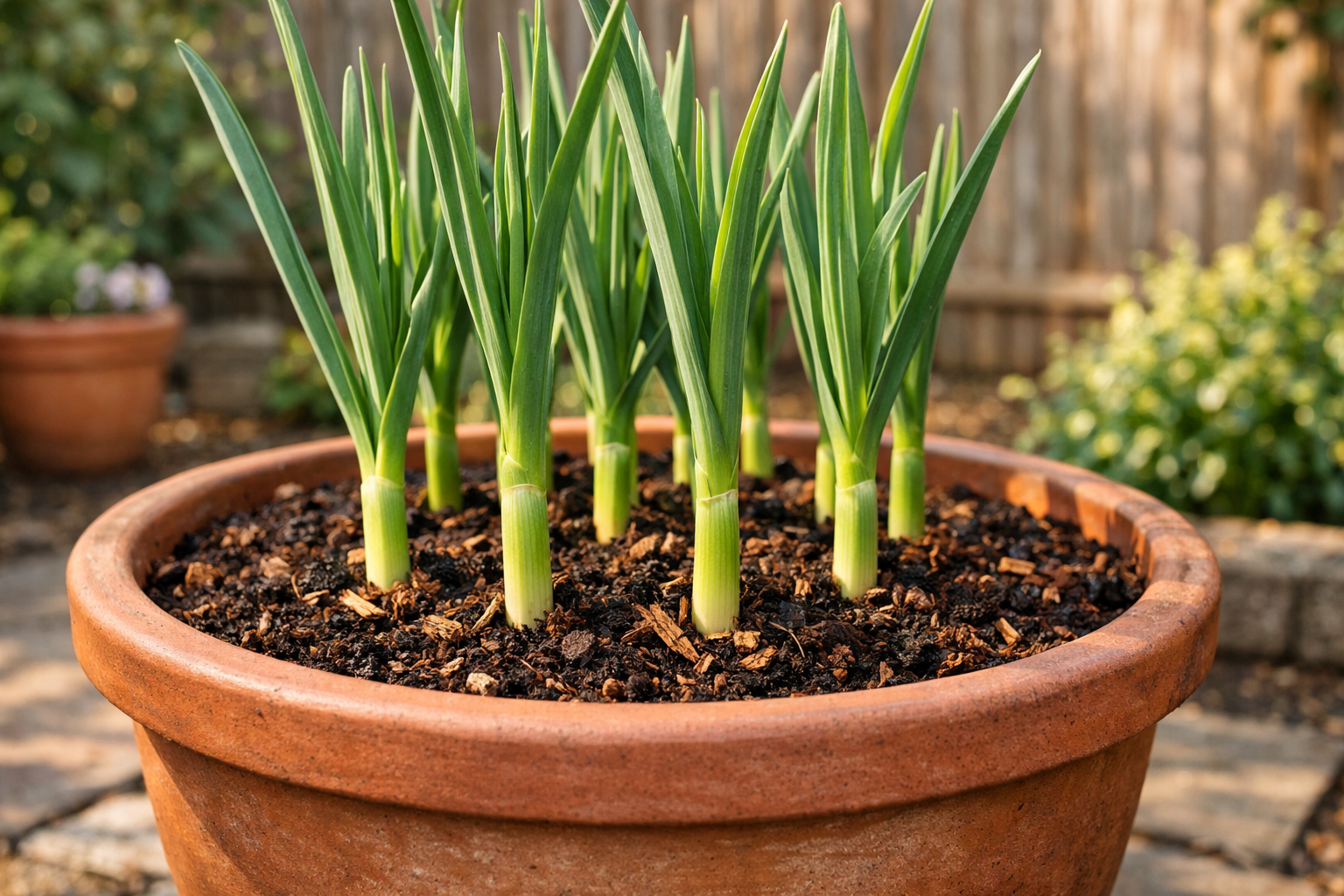
If you are growing garlic in containers, choose a pot that is at least 8–10 inches deep with drainage holes at the bottom. Fill the container with high-quality potting soil mixed with compost to provide nutrients throughout the growing season.
Garlic prefers a sunny location. A spot that receives at least six hours of sunlight per day will usually produce strong, healthy plants.
3. Planting Garlic Cloves
Planting garlic is simple and requires very little equipment. Each clove should be planted with the pointed end facing upward and the flat base downward, where the roots will grow.
Place the cloves about 2 inches deep into the soil and space them approximately 4–6 inches apart. This spacing allows the bulbs to expand properly as they mature.
After planting, gently cover the cloves with soil and water the area lightly. If planting in an outdoor garden, a thin layer of mulch such as straw or shredded leaves can help retain soil moisture and regulate temperature.
4. Watering and Care
Garlic does not require excessive watering, but it does benefit from consistent moisture during the growing season. The soil should remain lightly moist but never waterlogged. Overwatering can lead to poor growth or root problems, so good drainage is important.
As the plants grow, you will notice green shoots emerging from the soil. These shoots will gradually develop into tall, narrow leaves. During this stage, occasional feeding with a balanced organic fertilizer or compost can support steady growth.
Keeping the area around garlic plants free from weeds is also helpful. Weeds compete for nutrients and water, which may reduce the size of the final bulbs.
5. Growing Garlic in Small Spaces
One of the best features of garlic is that it grows well in compact areas. Even gardeners with limited outdoor space can grow a useful amount of garlic using containers, small raised beds, or narrow garden rows.
A single medium-sized container can hold several garlic cloves, making it ideal for patios, balconies, or small backyard gardens. Vertical gardening setups and container groupings can also allow you to grow multiple plants without taking up much space.
Because garlic has a relatively small footprint, it can easily fit between other vegetables or herbs in a mixed garden bed.
6. Knowing When to Harvest
Garlic usually takes several months to mature, depending on planting time and growing conditions. As the bulbs approach maturity, the lower leaves of the plant will gradually turn yellow or brown while the upper leaves remain green.
This is a natural signal that the bulbs are nearly ready to harvest. When roughly half of the leaves have changed color, carefully loosen the soil around the bulb and lift it gently from the ground.
After harvesting, garlic should be allowed to dry in a shaded, well-ventilated area for several weeks. This curing process helps improve storage life and flavor.
Conclusion
Growing fresh garlic at home is a simple and rewarding experience that almost anyone can enjoy. With just a few healthy cloves, well-prepared soil, and a sunny location, gardeners can produce flavorful garlic bulbs right in their own backyard or container garden.
Garlic is well suited for both large gardens and small spaces, making it an excellent choice for beginners and experienced gardeners alike. Its low maintenance needs and reliable growth make it one of the easiest crops to grow successfully.
By following a few basic planting and care steps—choosing healthy cloves, preparing good soil, providing sunlight, and watering consistently—you can enjoy a steady harvest of homegrown garlic. Over time, many gardeners find that growing garlic becomes a regular and enjoyable part of their gardening routine.
With patience and simple care, your garlic plants can reward you with fresh, flavorful bulbs that enhance both your garden and your kitchen.