How to Plant Carrots in Egg Trays (And Get Faster, Stronger Sprouts!)
If you’ve ever struggled to get carrot seeds to sprout evenly, you’re not alone. Those tiny seeds blow away in the wind, wash around when you water, and love to tuck themselves too deep into the soil. Before you know it, your rows look patchy and half-empty. That’s why gardeners are turning to a simple household item that quietly solves all of that—egg trays.
This little trick gives you better control, steadier moisture, and quicker sprouting, all without fancy equipment. Once you try it, you’ll wonder why you ever sowed carrots straight in the ground.
Why Egg Trays Work So Well for Carrot Seeds
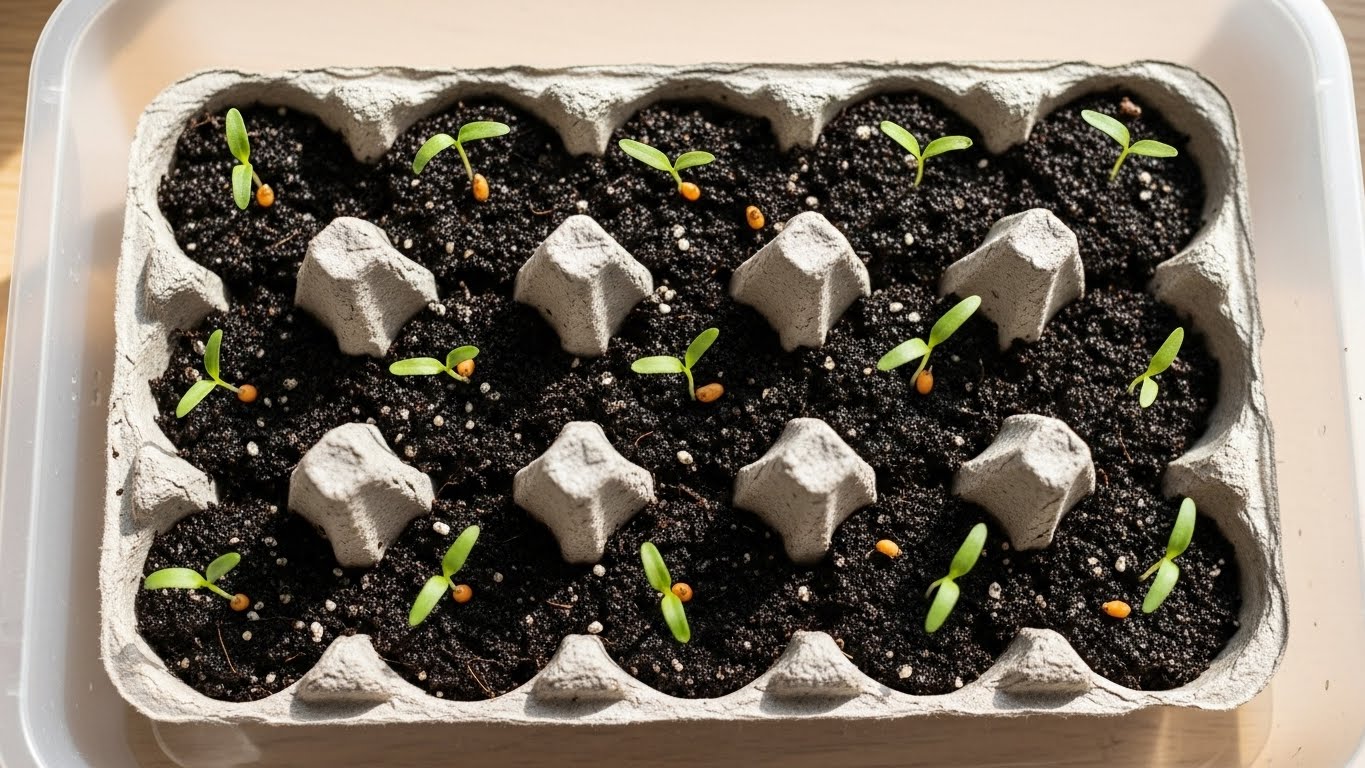
Egg trays create a tidy grid that keeps your seeds exactly where you want them. Each pocket acts like a mini starter cell, helping the seeds stay put instead of drifting around.
They also help with:
Even Moisture
The paper naturally absorbs and holds water, so your seeds stay consistently damp—something carrots adore during germination.
Perfect Spacing
Each cavity gives you one ideal “spot,” which helps you avoid overcrowding and thinning later.
No More Deep Planting
The tray keeps seeds close to the surface, right where they sprout fastest.
A Simpler Transplanting Process
Once the seedlings poke through, the paper softens and breaks down. You can plant the whole thing or pull sections apart without disturbing the roots.
What You’ll Need
Paper egg trays (not plastic or foam)
Carrot seeds
Spray bottle with water
A shallow tray or container to hold the egg carton
Seed-starting mix or fine potting soil
Clear plastic cover or plastic wrap (optional)
Step-by-Step: How to Plant Carrots in Egg Trays
1. Prepare the Egg Tray
Set your paper tray inside a shallow container. This helps keep it moist from the bottom and prevents it from falling apart too fast.
Lightly mist the tray until it feels damp—not soggy.
2. Fill Each Pocket With Fine Soil
Use a soft, crumbly mix so the tiny seeds don’t disappear into heavy clumps. Gently tap the tray to settle the soil.
3. Add One or Two Carrot Seeds Per Pocket
Carrot seeds are tiny, so grab a pinch and drop just a couple into each indentation. This naturally spaces out your plants later.
4. Cover Seeds with a Dusting of Soil
Carrots sprout best when covered lightly. A thin sprinkle—just enough to hide the seeds—is perfect.
5. Mist Gently to Avoid Disturbing the Soil
Carrot seeds hate being blasted with water. A fine spray keeps them where they belong.
6. Keep Moist and Warm Until Germination
Place the container in a bright, warm spot. Covering it loosely with plastic can help trap humidity, but don’t seal it tightly.
Check daily and mist whenever the top starts drying out.
7. Watch for Sprouts in About 7–14 Days
Once the seedlings lift their heads, remove any cover and move them to a bright window or under grow lights so they stay strong and upright.
When and How to Transplant Your Carrot Seedlings
Carrots don’t like their roots disturbed, but the egg tray trick makes things much easier.
Let the Paper Break Down
When the seedlings reach about 2–3 inches tall, the carton should already be soft. That’s your cue.
Cut the Tray Into Sections
Snip it into individual cells or small clusters. Keep the soil intact.
Plant the Paper Sections Directly Into the Ground
Dig a shallow trench or individual holes and set the tray pieces in place. Cover the top edges with soil, water well, and walk away. The paper will continue to break down as the roots grow.
Space Them Properly
Aim for about 2–3 inches between seedlings so each carrot has room to size up.
Tips for Faster, Stronger Carrot Growth
Choose the Right Soil
Loose, fluffy soil is key. Hard or rocky soil leads to twisted or stunted carrots.
Water Consistently
Carrots love steady moisture—don’t let the soil dry out, especially during the sprouting stage.
Avoid High-Nitrogen Fertilizers
You want roots, not giant leafy tops. Use balanced, gentle fertilizer only when needed.
Thin If Necessary
If two seedlings grow in one cavity, gently snip one at the base. Don’t pull it—pulling disrupts the surviving root.
Common Mistakes to Avoid
Burying seeds too deep – causes slow or failed germination.
Using plastic or foam cartons – they don’t break down and may restrict roots.
Letting trays dry out – carrots need constant moisture early on.
Planting into heavy clay soil – makes straight carrots nearly impossible.
Final Thoughts
Egg trays quietly solve some of the biggest carrot-growing headaches—uneven spacing, drifting seeds, poor moisture, and tricky germination. This method gives you a head start, whether you’re gardening in a backyard, raised bed, or even containers. Once those sprouts break through, you’ll see just how well this simple trick works.