8 Self-Seeding Vegetables & Herbs That Come Back Every Year
Imagine planting once and enjoying harvests year after year with little extra work. Sounds like a gardener’s dream, right? Well, it’s possible thanks to self-seeding vegetables and herbs. These are the plants that drop their own seeds at the end of the season and naturally sprout again the following year. With just a bit of guidance, you can build a garden that keeps giving without constant replanting.
In this guide, we’ll cover 8 reliable self-seeding vegetables and herbs, how to care for them, and why they belong in your garden.
What Does “Self-Seeding” Mean?
Self-seeding plants complete their life cycle by flowering, producing seed pods, and scattering those seeds into the soil. If the conditions are right—sunlight, moisture, and soil quality—those seeds will germinate and grow into new plants without you lifting a finger.
This doesn’t mean you can completely ignore your garden. A little tidying, selective thinning, and seasonal mulching will help your self-seeders thrive and prevent overcrowding.
1. Arugula
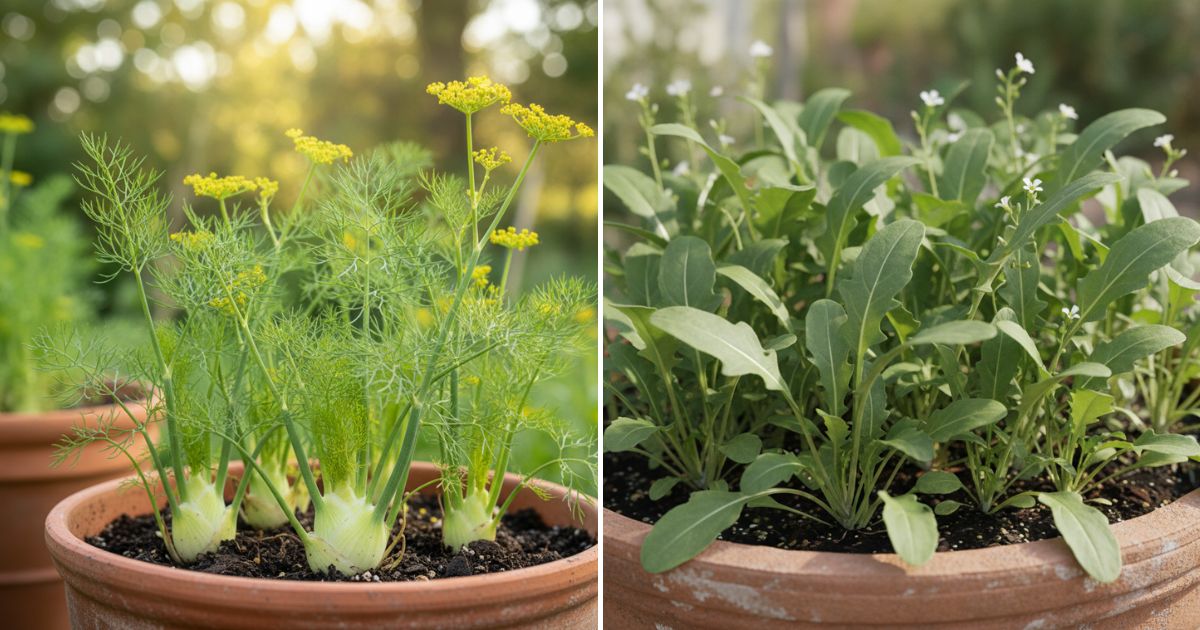
Arugula is a fast-growing green that’s famous for reseeding itself. Left to flower, it produces tiny seed pods that scatter easily. By late spring or fall, you’ll often find a fresh patch of peppery arugula leaves ready for picking.
Pro tip: Allow a few plants to bolt (flower) each season, and you’ll never run out of this salad favorite.
2. Kale
Many gardeners treat kale as an annual, but it’s a generous self-seeder. Once it flowers, the seed pods burst and sprinkle fresh seeds into the soil. New kale seedlings usually pop up as soon as temperatures cool down.
Pro tip: Thin young seedlings early so they have space to grow into full, leafy plants.
3. Dill
This fragrant herb is practically unstoppable once it settles in your garden. Dill produces umbels full of seeds that fall everywhere, ensuring you’ll see volunteers year after year.
Pro tip: Let a few dill plants flower near cucumbers or tomatoes—they’ll attract pollinators and beneficial insects.
4. Cilantro (Coriander)
Cilantro can be tricky to keep alive in summer heat, but the beauty of this herb is its ability to reseed itself. As soon as it bolts, the seeds (known as coriander) scatter and germinate when the weather cools.
Pro tip: Let cilantro reseed in late summer, and you’ll enjoy fresh leaves in early fall.
5. Parsley
Parsley is biennial, but it self-seeds so reliably it feels like a perennial. Its seeds take a while to sprout, but once they do, you’ll have fresh parsley popping up around your garden for years.
Pro tip: Mark where parsley once grew—its seedlings are slow to appear and easy to mistake for weeds.
6. Lettuce
Lettuce may not seem like a self-seeder, but it’s one of the easiest. Once it bolts, tall stalks of flowers produce fluffy seed heads that drift into the soil. Next spring, you’ll likely see baby lettuce scattered across your beds.
Pro tip: Allow heirloom or leaf lettuce varieties to reseed—hybrids don’t always grow true to type.
7. Radish
Radishes grow fast, flower quickly, and set seed pods that drop back into the soil. If you let a few radishes bolt, you’ll get free seedlings popping up throughout the season.
Pro tip: Radish seed pods are edible and have a mild, peppery crunch—harvest some while letting the rest reseed.
8. Fennel
Fennel is a strong self-seeder that thrives once established. Its feathery fronds and fragrant seeds return each year if left to flower and scatter naturally.
Pro tip: Give fennel its own spot—it can dominate a bed once it starts reseeding freely.
Tips for Managing Self-Seeding Plants
Choose a dedicated area: Self-seeders can spread, so give them space where a bit of wild growth won’t bother you.
Thin regularly: Too many seedlings can compete for nutrients, leading to smaller harvests.
Mulch lightly: Thick mulch can block seeds from germinating. Use a thin layer to protect soil without smothering seedlings.
Save extras: If seedlings sprout where you don’t want them, transplant or share them with neighbors.
Why Self-Seeding Vegetables & Herbs Are a Gardener’s Best Friend
Growing self-seeding vegetables and herbs saves money, reduces effort, and creates a natural rhythm in your garden. They also attract pollinators and help build soil health when allowed to flower and seed. Best of all, these “plant once, enjoy forever” crops keep your garden looking lush and productive year after year.
So if you’re looking to make gardening simpler, let nature do the work. Add these 8 self-seeding vegetables and herbs to your beds, and you’ll enjoy effortless harvests for seasons to come.