How to Sow Pepper Seeds the Right Way
Pepper plants are one of those garden favorites that never really go out of style. Sweet or spicy, compact or bushy, they all start the same way—with a tiny seed and a bit of patience. Yet, despite their popularity, many gardeners struggle at the very first step. Seeds don’t sprout, seedlings look weak, or growth feels painfully slow. Sound familiar? Don’t worry—you’re not alone.
Learning how to sow pepper seeds the right way can make all the difference. When done properly, it sets the stage for strong seedlings, healthy plants, and generous harvests later in the season. This guide walks you through the process step by step, using reliable, time-tested methods that work for beginners and experienced gardeners alike. No shortcuts, no risky claims—just solid gardening know-how you can trust.
Why Proper Sowing Matters
Pepper seeds are a bit picky. Unlike some fast-sprouting vegetables, they prefer warmth, steady moisture, and a gentle start. If conditions are off—even slightly—germination can be slow or uneven. By focusing on the basics early on, you give your plants a smoother, stress-free beginning. And honestly, once you get this part right, everything else feels easier.
Choosing the Right Seeds
Start with fresh, high-quality seeds from a reputable source. Older seeds can still sprout, but germination rates tend to drop over time. Whether you’re growing bell peppers, chili peppers, or specialty varieties, always check the packet date and storage recommendations. Good seeds are the foundation—no way around it.
When to Sow Pepper Seeds
Timing is crucial. Pepper seeds are usually started indoors 8 to 10 weeks before the last expected frost date in your area. They need a long growing season, and starting early gives them a valuable head start. Sowing too early, however, can lead to leggy seedlings if light and warmth aren’t sufficient. Balance is key.
Preparing the Growing Medium
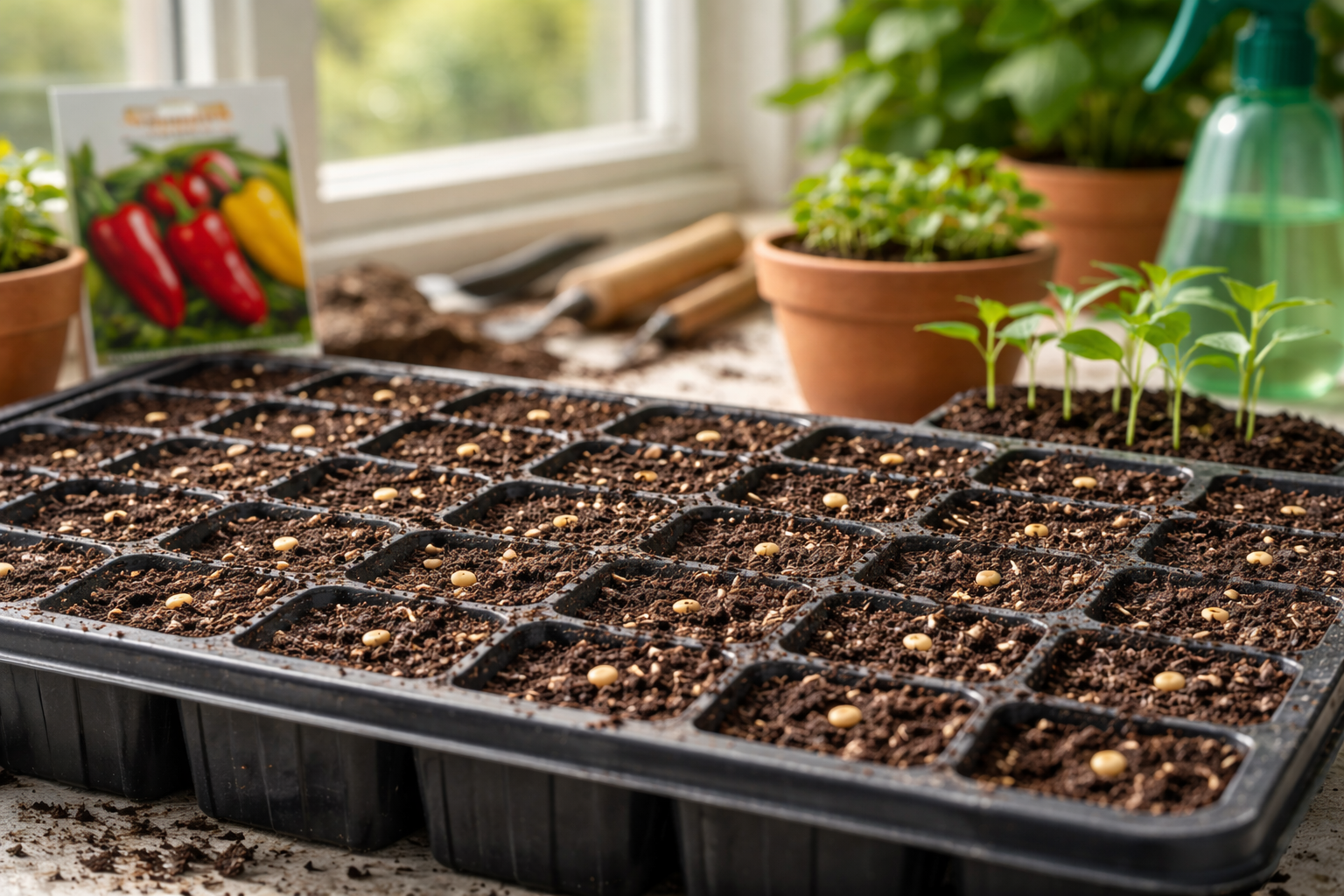
Use a light, well-draining seed-starting mix. Regular garden soil is too heavy and can hold excess moisture, which increases the risk of rot. A quality seed mix allows roots to breathe while still holding enough moisture for germination. Fill clean seed trays or small pots, gently firm the mix, and water it lightly before planting.
How Deep to Plant Pepper Seeds
Pepper seeds should be planted shallowly—about ¼ inch deep. Place one or two seeds per cell or pot, then lightly cover them with the growing mix. Press gently to ensure good contact between seed and soil. This small step helps moisture reach the seed more evenly.
Watering the Right Way
Moist, not soaked—that’s the goal. After planting, water gently so the seeds stay in place. Bottom watering works especially well, as it keeps the surface from becoming compacted. Throughout germination, the soil should remain consistently moist but never soggy. Too much water can slow sprouting or encourage disease.
Warmth: The Secret Ingredient
Pepper seeds love warmth. Ideally, soil temperatures should stay between 75°F and 85°F (24–29°C). A warm room, a sunny spot, or a simple heat mat can significantly improve germination speed and success. Without enough warmth, seeds may take weeks to sprout—or not sprout at all.
Light After Sprouting
Once seedlings emerge, light becomes the top priority. Place them under grow lights or near a bright window where they receive plenty of light each day. Insufficient light causes seedlings to stretch and weaken. Keep lights close (but not touching) and adjust as plants grow.
Thinning and Early Care
If more than one seed sprouts in a cell, thin out the weaker seedling by snipping it at soil level. This avoids disturbing roots. As seedlings grow, continue watering consistently and rotate trays occasionally so plants develop evenly.
Common Mistakes to Avoid
One common mistake is rushing the process. Pepper seeds take time, even under ideal conditions. Another is overwatering, which often does more harm than good. Finally, don’t skip labeling—pepper varieties can look surprisingly similar in their early stages.
Conclusion
Sowing pepper seeds the right way isn’t complicated, but it does require attention to detail. By using fresh seeds, planting at the right depth, maintaining warmth, and providing steady moisture and light, you give your peppers exactly what they need from day one.
Think of this stage as an investment. A little extra care now leads to stronger plants, fewer problems later, and a more rewarding growing season overall. Whether you’re growing peppers on a sunny windowsill or planning a full garden harvest, starting seeds properly is a skill worth mastering.
Take it step by step, stay patient, and enjoy the process. Before you know it, those tiny seeds will turn into thriving plants—and that’s when the real fun begins.